
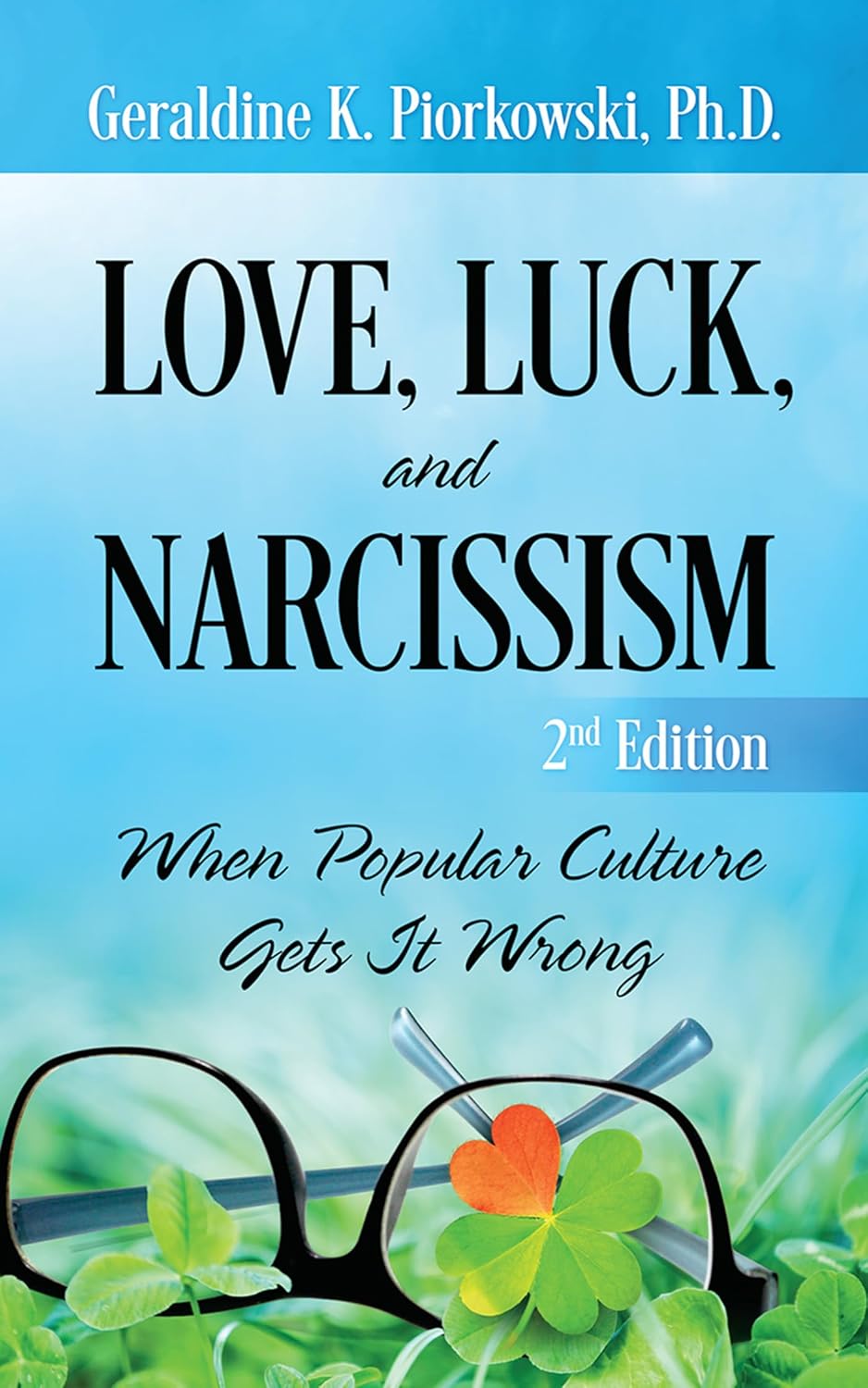
Love, Luck, And Narcissism When Popular Culture
Gets It Wrong
Geraldine K. Piorkowski, Ph. D.
What if some of the most popular beliefs about happiness,
love, and self-improvement are not only incomplete—but psychologically harmful?
In Love, Luck, and Narcissism: When Popular Culture Gets
It Wrong, a retired clinical psychologist, Dr. Geraldine K. Piorkowski, with
more than fifty years of experience offers an intriguing series of insights
that challenge the modern self-help obsession with relentless positivity. The
book begins with a surprising truth: positive thinking is not always helpful.
When it bypasses grief, doubt, disappointment, or loss, it can distort reality,
impair judgment, and interfere with genuine emotional healing
Across eight thought-provoking chapters, readers are invited
into a deeper, more realistic psychology of everyday life. You’ll discover why
romantic love is often shaped by fantasy in its earliest stages, why we cannot
truly make anyone do anything, and how anger—when restrained and purposeful—can
provide the energy for positive transformation.
Perhaps most unexpectedly, the book reframes narcissism.
Rather than treating all self-focus as toxic, it introduces the essential idea
of healthy narcissism: the delight we take in our talents, achievements, and
simple pleasures, which can nourish joy and protect against depression.
The author also explores the underrated role of luck and
chance in shaping life outcomes, offering readers a path away from crushing
self-blame and toward gratitude and acceptance.
Warm, insightful, and deeply human, Love, Luck, and
Narcissism: When Popular Culture Gets It Wrong is ideal for therapy-curious readers,
spiritually reflective seekers, counselors, educators, and anyone ready to
break free from repeating destructive relationship patterns and misleading cultural
myths.
This is not a book about blind optimism—it is a book about
psychological truth.
BOOK REVIEWS:
“Barbara Jones
The second edition of this book imparts the same wisdom as the first—from a clinical psychologist who has “been there and done that” for more than fifty years. This gift to a troubled world could not be delivered more succinctly, as in: “You can’t make anybody do anything.” Dr. Piorkowski’s deceptively brief and easy-to-read book packs a punch we need to navigate today’s U.S. society increasingly filled with social media platitudes and narcissism.
One of my favorite chapters explains why “Suzy Sunshine” doesn’t help anyone with vacuous positive thinking. Such an attitude can actually prevent depressed people from getting the professional help they need. Piorkowski also points out the role of “luck” in one’s life. It is all well and good to “pull yourself up by the bootstraps,” but some have more tools than others.
The chapter on vulnerability is very compelling. Because U.S. culture often masks vulnerability with false bravado and machismo, I found her background on passive-aggressive behavior and other “adjustments” valuable for understanding everyone from fellow workers to political leaders.
I was pleased with the discussion of “empathy.” We can read about it but we can’t understand empathy until we get to know people whose life journeys differ dramatically from ours. I was also pleased to see “empathy” attached to “healthy religion.” Clients have made it clear that religious expressions such as prayer and good works have helped them heal. Piorkowski digs even more deeply to identify those factors that can make some religious activity unhelpful or even harmful.
Piorkowski’s 8 chapters are not only memorable, but also helpful for remembering that they apply to most of us—that we share a common humanity with those who differ from us in such areas as ethnicity and economic status. Piorkowski does not pull any punches, and she definitely does not romanticize our journey, but I still finished the book more hopeful than when I began.
“Betty Jo Birkhahn-Rommelfanger
In a time of division, fear, isolation and an upsurge of violence i personal relations, our communities and world, "Love, Luck and Narcissism: When Popular Culture Gets It Wrong" speaks volumes in navigating life. Dr. Geraldine Piorkowski has offered her wisdom and experience in a book that is highly readable and relates to our lives in profound ways. As a pastor who looks for resources for counseling and preaching, I recommend it as it deals with how to be truly accepting of our humanness. This is a book for people willing to do some serious self reflection. The struggles of love, relationship, sadness, anger, depression, vulnerability and so much more, even narcissism is expressed in real examples. She encourages healthy anger and narcissism, but warns against the extremes. I appreciated her taking on the destructiveness of violence focused on ourselves or others. Whether it be spanking or torture, violence only harms everyone for life. The chapter on "You Can't Make Anybody Do Anything" says it all! The book addresses universal truths that become personal as she writes "we all need to be understood." Her final chapter deals with empathy and healthy religion or spirituality that is essential in "self understanding in order to develop our potential as human beings." Healthy religion moves beyond bigotry and exclusivity to a universal experience that values each person and is necessary to restore wholeness and peace.
Rev. Betty Jo "B.J." Birkhahn-Rommelfanger, United Methodist Pastor
“Valarie
Geraldine discusses topics that we most often overlook. We get to see that positive thinking is not always a solution we should jump to, as at times it may be more destructive than we think. We also learn that we cannot make anyone do anything. The decision to do anything is ultimately up to them. The analysis does not end here. The author goes on to further discuss punishment, the role of luck in our lives, and even religion. This is a book to consider if you enjoy topics that spark insightful discussions and explore controversial issues."
“Kimster
This is a second, updated editon to Dr. Piorkowski's first book, "Beyond Pipe Dreams and Platitudes." I recommend this book highly to anyone searching for insights about themselves, others, finding meaning, and dealing with vulnerabilities. This book gets to the point quickly about many issues that complicate human relationships from the "insider view" of a well respected Chicago psychologist/therapist, Dr. Geraldine Piorkowski, who has helped many over the years. It is refreshing, direct, and honest about the human condiiton. This book speaks well to the general public with its pithy chapters easily "digestible" for digitally distracted 21st century moderns. And the topics are both universal and timely. For example, how should a parent balance praising with NOT praising a child to help develop better self esteem? Where does anger come from? How do we deal with what is not under our control? The book has one of the best explanations for empathy that I have ever read--beautifully, simply defined. It may also stimulate ideas in those who are already in psychotherapy or those searching for guidelines on their own. This book's "cut to the chase" realism opens up new creative, hopeful space to connect more meaningfully with ourselves and others."
“Kathleen Gallo
Author’s experience, thoughtfulness and insight shine throughout the eight interesting essays. Since I stopped reading the book, I have been reflecting on it.
The book clarified for me when anger is useful and powerful but also when it is not. I learned from the author that when anger is coupled with feelings of entitlement, narcissists and others who believe they’re always right have a hard time listening to others. But I also learned that narcissism can have a healthy side, i.e., when we enjoy our successes and rejoice in our talents without demeaning others.
Other of the author’s insights that affected me were:
(a) Luck or chance influences us way more than we know. We cannot choose our parents and early environment while accidents, illness or one mistake can change a life’s trajectory overnight.
(b) Positive thinking is sometimes a mistake, especially when it interferes with our judgment and bypasses the normal processing of losses and disappointments.
I loved the first edition, “Beyond Pipe Dreams and Platitudes”, but the second edition “Love, Luck and Narcissism,” is even better. I strongly recommend giving it a read.
“Alice Bernstein, Ph.D.
This book is a wise, easy to understand, and wide-ranging analysis of present day life in the U.S.A. from the psychological point of view. "Love, Luck, and Narcissism: When Popular Culture Gets It Wrong" will expand readers' understanding of themselves and others, with many engaging examples from Dr. Piorkowski's personal and professional experience. Particularly notable are the chapters on "Intimacy", which unravels the reasons why love is so difficult and easily damaged, and on "Vulnerability" and "Empathy", exploring important aspects of friendship and love. Unlike authors who exaggerate the importance of self-creation, Dr. Piorkowski illuminates the role of luck in life and how misinterpretation of its impact can lead to either false pride or undeserved self-depreciation. Her final chapter points out the universal values of religion which counterbalance the narcissism, materialism and violence that too often are part of modern life. This is the slightly revised Second Addition of this book, which was previously published as "Beyond Pipe Dreams and Platitudes".
OTHER BOOKS
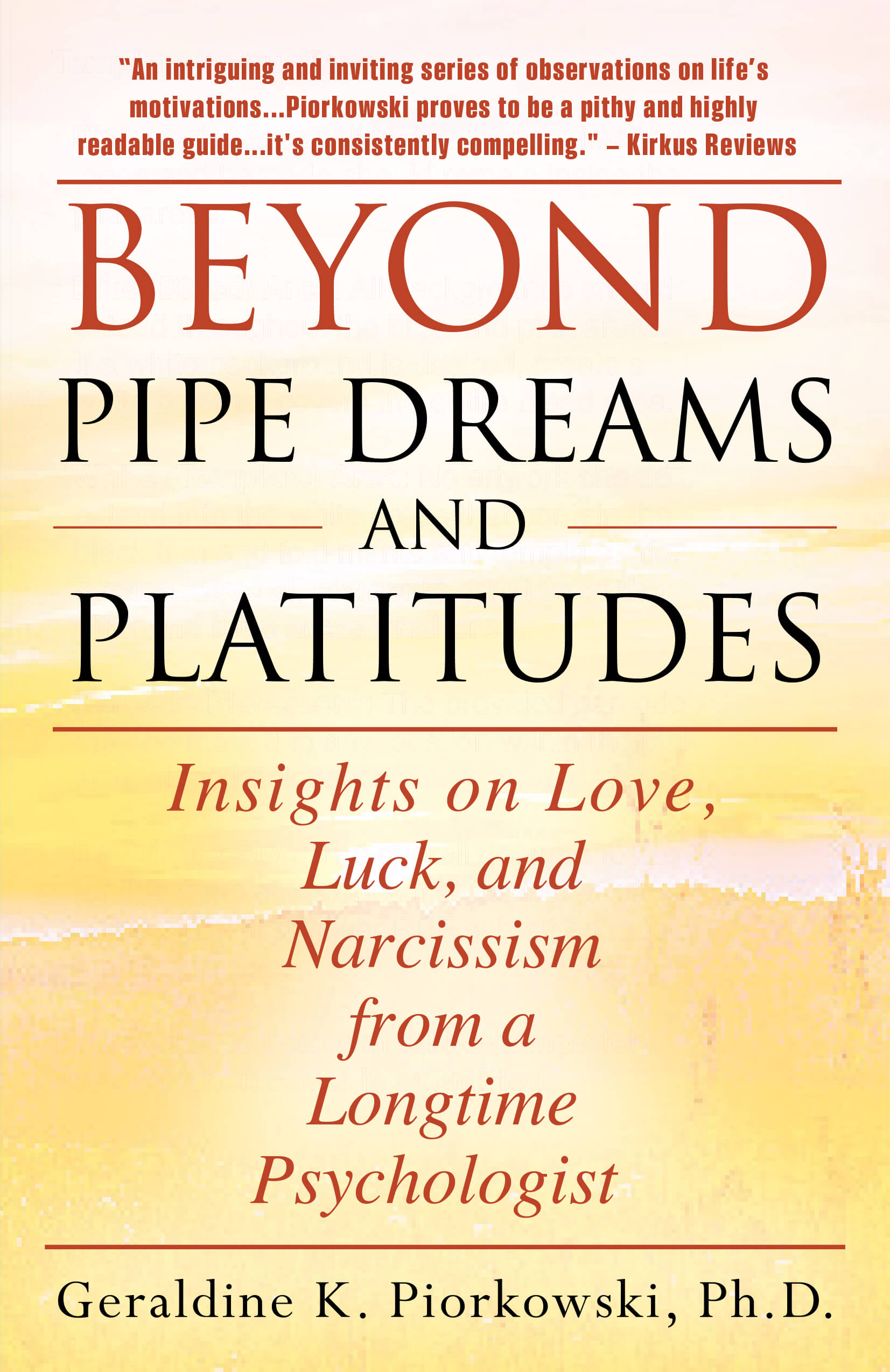
Beyond Pipe Dreams and Platitudes:
Insights on Love, Luck, and Narcissism from a Longtime Psychologist
This book is a collection of eight essays that was written to communicate what the author learned working with individuals of all ages, races, sexual orientations, and walks of life for over fifty years.

TOO CLOSE FOR COMFORT
Exploring The Risks Of Intimacy
Countless experts offer us advice on how to create the "perfect relationship," fostering the unrealistic expectation that forming an intimate bond will be a painless experience. Unfortunately, few experts are willing to confront the powerful challenges and emotions inherent within close relationships today.

Adult Children of Divorce
Confused Love Seekers
Romantic love is often an elusive, fragile, and tenuous state, difficult to maintain across time. The rates of divorce, re-divorce, relationship violence, and abuse today attest to the fact we are failing at romantic love. And for teen-aged and adult children of divorce, romantic love can be especially elusive.